There was a time when almost every spiritual or esoteric practice I encountered seemed to begin with protection. If you were meditating deeply, exploring altered states, visualising, journeying, or doing energy work, there was often an instruction to “protect yourself” first. One of the most common approaches was surrounding yourself with a white light of protection before beginning any inner exploration.
I remember doing this myself many years ago. In some traditions it was considered almost essential. You would visualise a protective sphere or energetic shield around yourself so that nothing harmful could enter your space. At the time, I accepted it because it was so widely taught. Yet something about it never entirely sat comfortably with me.
It was not that I disliked visualisation. Quite the opposite. I found visualisation fascinating and often very powerful. What felt strange was the underlying assumption behind the practice. It seemed to begin from the idea that spiritual exploration itself was fundamentally risky. The implication was that there was a good chance you would encounter harmful forces, negative energies, or dangerous influences that needed defending against.
Over time, I realised that this creates a particular emotional relationship with life. It subtly encourages vigilance, tension, and the expectation of threat. Even before beginning a practice, the mind is already orientated toward what might go wrong.
Then I came across Huna, and something shifted quite profoundly for me.
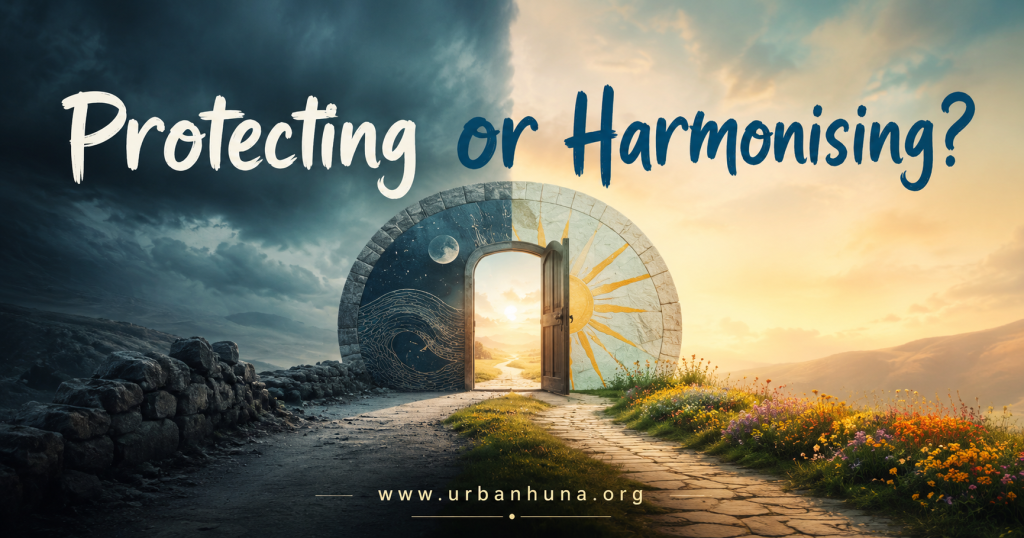
Rather than protection against, I encountered the idea of harmonising with. One of the concepts that deeply resonated with me was La‘a kea, sometimes described as the love light. Here, the emphasis is not on defending yourself from hostile forces, but on bringing yourself into harmony through clarity, openness, connection, and loving awareness.
That difference may sound small at first, but emotionally and psychologically it feels entirely different.
One of the principles associated with Huna is makia, which is frequently summarised as: energy flows where attention goes. In practical terms, this points toward something many people have noticed in everyday life. Whatever we repeatedly focus upon tends to become more vivid within our experience. Attention undeniably shapes perception, expectation, emotional tone, and the patterns we become sensitised to.
If we approach spiritual practice already focused on danger, attack, or negativity, then our awareness naturally becomes tuned toward threat. We begin scanning for problems. Neutral experiences can start to feel loaded with meaning. Fear becomes part of the atmosphere before we have even begun.
This was one of the things I found so refreshing about the Huna perspective. The emphasis on harmonising rather than protecting immediately changes the quality of attention we bring into an experience. Instead of bracing against life, there is an invitation to relate to life more openly and more consciously.
Rather than saying:
“I must defend myself from what is out there,”
the orientation becomes something closer to:
“How can I bring myself into greater harmony with this experience?”
That simple shift can soften a surprising amount of tension.
One of the easiest ways to notice the difference between protection and harmonising is simply to pay attention to how each approach feels in the body.
Protection-based thinking can easily create contraction. The nervous system tightens. Awareness narrows. The imagination begins searching for possible dangers. Again, there are certainly situations in life where caution and discernment matter deeply. Huna is not about abandoning common sense or pretending harmful situations never exist. Boundaries are important and wisdom matters.
However, constantly approaching life from a defensive position can become exhausting. The body remains subtly prepared for conflict. Relationships become harder to relax into. Inner practices become coloured by anxiety rather than curiosity.
Harmonising feels very different. There is often more openness in it. More groundedness. More trust in your ability to respond wisely to experience rather than needing to defend yourself against every possibility in advance.
For me, this became valuable not only in spiritual practice, but in ordinary daily life as well.
It is interesting how easily the language of protection appears in everyday situations. People often speak about “guarding themselves,” “putting walls up,” or “protecting their energy” in relationships, workplaces, social settings, or family dynamics.
Of course, many people have understandable reasons for becoming guarded. Painful experiences can lead us to become defensive as a way of trying to stay safe. There should be compassion for that.
Yet protection-first living can sometimes create the very atmosphere we hope to avoid. When we continually expect criticism, betrayal, or hostility, we can become increasingly sensitive to signs of them. Conversations become harder to relax into. Neutral interactions can feel threatening. Small misunderstandings escalate more quickly.
Approaching life from a place of harmonising changes the quality of interaction. Instead of trying to energetically “win” or defend, there is more room for listening, responsiveness, flexibility, and presence. There is still space for healthy boundaries, but those boundaries tend to arise from clarity rather than fear.
This is one reason why I increasingly resonate with the idea of a Huna practitioner as a ‘harmoniser’ rather than simply a ‘healer’.
Sometimes Huna practitioners are described as healers of mind, body, spirit, relationships, and circumstances. I appreciate the spirit behind that description, but over the years I have found myself drawn more and more toward the word ‘harmoniser’.
Healing can sometimes imply that something is broken and needs fixing. Harmonising feels gentler and, in many situations, more accurate. It suggests restoring relationship, reducing inner conflict, softening friction, and bringing parts of ourselves back into alignment.
Sometimes suffering is not caused by something attacking us. Sometimes it emerges through overwhelm, fear, disconnection, confusion, or the loss of inner balance. Harmonising does not necessarily remove every challenge from life, but it can change how we meet those challenges.
The Huna principle of pono is often associated with effectiveness, harmony and alignment. From that perspective, the question becomes less about rigid spiritual rules and more about what actually creates greater harmony and effectiveness in life.
In most situations, fear and defensiveness simply do not create the most effective outcomes.
One of the things I appreciate most about Huna is that, at its healthiest, it tends to reduce unnecessary fear rather than amplify it.
Some spiritual systems can unintentionally create a worldview filled with hidden dangers, psychic attacks, hostile energies, curses, and endless unseen threats. For certain people, this can slowly create a state of hypervigilance where life itself begins to feel spiritually unsafe.
Every difficult interaction starts to feel energetically loaded. Every uncomfortable emotion risks being interpreted as some form of attack or contamination. Over time, spiritual practice can become emotionally heavy and exhausting.
What I found refreshing in Huna was the emphasis on awareness, relationship, responsibility, flexibility, and love rather than fear. Not because difficult experiences never happen, but because fearful fixation is rarely the most effective way to meet them.
The state we bring into an experience matters. Expectations matter. Attention matters. Emotional tone matters.
When we continually orientate ourselves toward harmony, connection, and grounded presence, we often experience life very differently.
Experiment with Harmonising Instead of Protecting
If you use visualisation practices, try replacing protective imagery with harmonising imagery. Rather than imagining a shield defending you from danger, experiment with imagining yourself surrounded by warmth, clarity, openness, or loving awareness. Notice whether this changes how your body and mind respond.
Notice the Language of Defence
Pay attention to how often your inner dialogue revolves around protection, defence, or guarding yourself. Simply noticing this can be revealing. Then gently ask yourself whether there may be another way to approach the situation.
Ground Yourself Rather Than Brace Yourself
Before entering a challenging conversation or situation, focus less on protecting yourself and more on grounding yourself. Feel your feet. Relax your shoulders. Slow your breathing. Let yourself become present rather than defended.
Ask What Creates More Harmony
This is a simple but surprisingly useful question: “What creates more harmony here?”
Sometimes the answer may involve openness. Sometimes honesty. Sometimes boundaries. Sometimes stepping away entirely. Harmonising is not passive. It is responsive and aware.
(If you try any of these practices, I’d love to hear your feedback).
For me, discovering this distinction between protection and harmonising was quietly transformative. It softened the emotional tone of spiritual practice and encouraged me to relate to life with more openness and less fear.
There are certainly times when caution, boundaries, and discernment matter deeply. Huna is not about denying that. But there is also something profoundly valuable about approaching life less as a battlefield and more as a relationship.
Not constantly braced against the world. But gradually learning how to move in greater harmony with it.
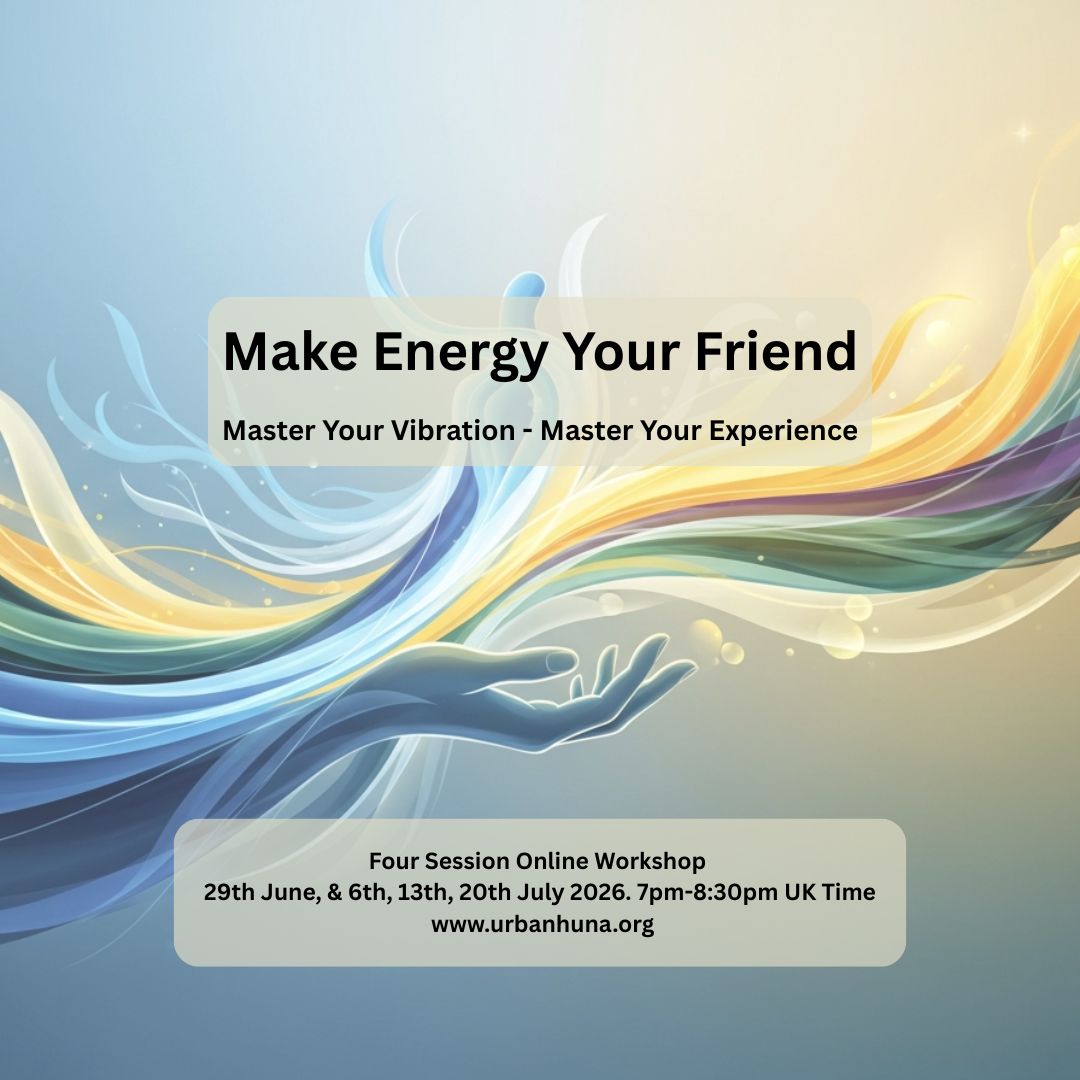
If you are interested in exploring a Huna perspective on energy, we are teaching a four part live online workshop Make Energy Your Friend in July 2026. Find out more here: https://www.urbanhuna.org/event/make-energy-your-friend/